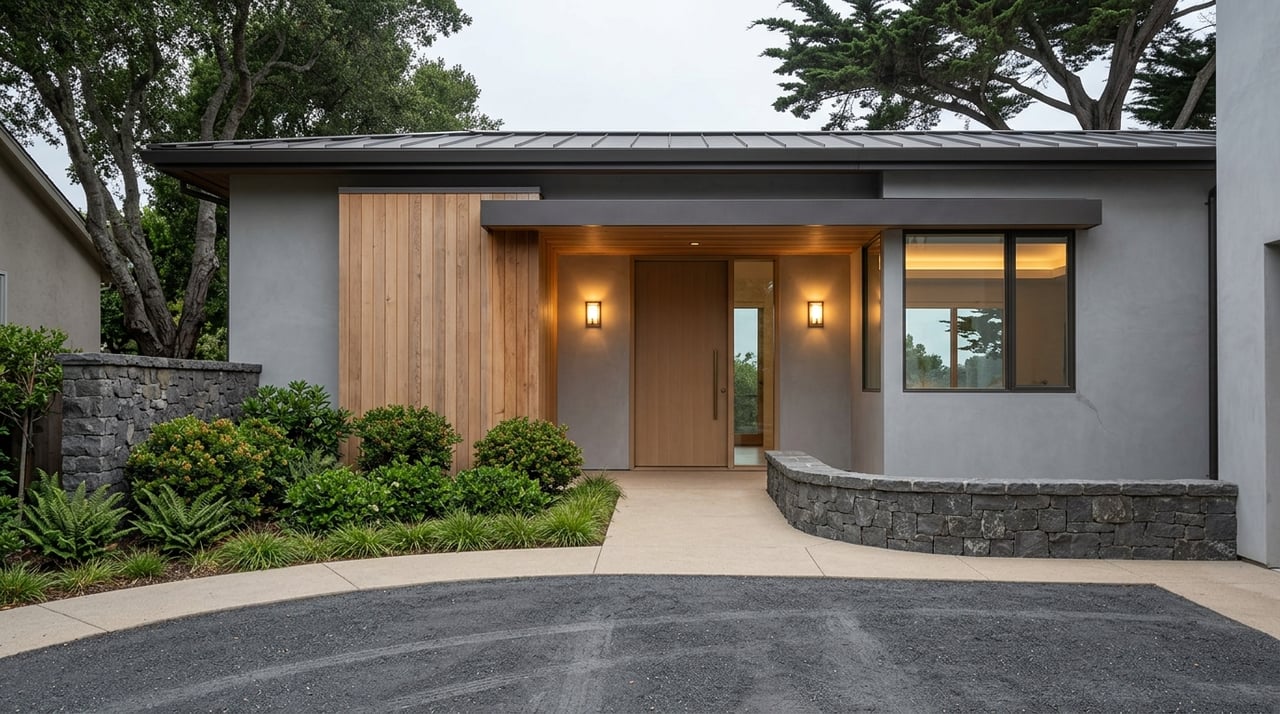
Luxury buyers often ask the same question: Which part of Pebble Beach actually fits the way I want to live? That is a smart question, because Pebble Beach is not one uniform neighborhood. It is a collection of distinct pockets shaped by coastline, golf, forest, resort access, and long-standing land-use patterns. If you are weighing where to focus your search, this guide will help you compare Pebble Beach’s signature neighborhoods with more clarity. Let’s dive in.
Why Pebble Beach Works as Micro-Markets
Pebble Beach is best understood as an unincorporated planning area at the south end of the Monterey Peninsula, not a single neighborhood with one feel. Monterey County’s planning framework divides the area into multiple planning areas, including Spanish Bay, Spyglass Cypress, Middle Fork, Pescadero, Huckleberry Hill, Gowen Cypress, Pebble Beach, and Country Club.
That matters when you begin a luxury home search. An oceanfront setting near the resort core offers a very different daily experience than a golf-adjacent home tucked into the forest. Looking at Pebble Beach as a set of micro-markets gives you a more useful way to match location, privacy, architecture, and lifestyle.
Pebble Beach’s identity is also shaped by major community and resort features. Pebble Beach Company operates The Lodge at Pebble Beach, The Inn at Spanish Bay, 17-Mile Drive, and the area’s major golf courses, while the broader community includes permanent open space and more than 25 miles of hiking, walking, and equestrian trails. Local services are handled by the Pebble Beach Community Services District, which provides services such as fire protection and EMS, wastewater collection and treatment, recycled water distribution, garbage and recycling collection, and utility undergrounding.
Spanish Bay: Resort Convenience by the Coast
For buyers who want a more resort-forward coastal setting, Spanish Bay stands out. It is the northernmost coastal pocket in the Del Monte Forest planning area and fronts the Pacific Ocean, with The Inn at Spanish Bay, related golf and resort facilities, and Spanish Bay condominiums located seaward of 17-Mile Drive.
The setting moves from sand dunes to native Monterey pine forest, which gives the area a distinctive coastal landscape. Compared with other parts of Pebble Beach, Spanish Bay tends to feel less like a deep residential enclave and more like a beach-adjacent resort community.
This pocket can be especially appealing if you want a lock-and-leave lifestyle. If your priority is ease, coastal atmosphere, and proximity to resort amenities, Spanish Bay often rises to the top of the list.
Pebble Beach Core: The Most Iconic Address
If you picture the classic Pebble Beach experience, you are likely picturing the core area around The Lodge and Stillwater Cove. Monterey County describes the Pebble Beach planning area as the largest in Del Monte Forest, with roughly four miles of shoreline stretching from near Cypress Point toward the Carmel-by-the-Sea city limits and Carmel Beach.
This planning area includes The Lodge at Pebble Beach, Pebble Beach Golf Links, the Beach and Tennis Club at Stillwater Cove, the Equestrian Center, and the main commercial center of the forest. Beyond those landmarks, the area is largely defined by low-intensity, large-lot residential use.
For luxury buyers, this is the most recognizable and visitor-facing part of Pebble Beach. It is a strong fit if you want to be closest to the resort core, iconic golf, and one of the most established coastal settings on the Monterey Peninsula.
Architecture in the Core
The core area also carries some of Pebble Beach’s richest architectural history. Monterey County notes that early development was shaped by Mediterranean Revival and Spanish Colonial Revival design controls, while post-war construction shifted toward Ranch homes and suburban Mid-Century Modern forms.
That means you should not expect one signature look. Instead, you may find a mix of early revival estates, later renovations, and architect-driven modern residences, including notable design-led homes documented in the broader Pebble Beach area.
Country Club: Established Golf-Centric Living
The Country Club planning area centers on Monterey Peninsula Country Club and is nearly fully developed. Monterey County describes the dominant land use here as the Shore and Dunes courses, integrated with significant single-family residential development.
This is one of the clearest choices for buyers who want a classic club-oriented setting. It feels quieter and more residential than the Lodge area, while still remaining closely tied to golf and coastal scenery.
Because the county does not contemplate significant new development here beyond redevelopment on existing lots, the area tends to appeal to buyers who value an established setting. In practical terms, that often means choosing among existing homes that have been updated, expanded, or reimagined over time.
What to Expect From the Housing Stock
Architecturally, the Country Club area fits within Pebble Beach’s broader design mix rather than standing apart as its own style category. The same regional pattern applies here: earlier Mediterranean and Spanish Colonial Revival influences, followed by a strong post-war presence of Ranch homes and some Mid-Century Modern examples.
If you are drawn to an established luxury neighborhood with golf at its center, Country Club offers a compelling balance. It tends to suit buyers who want a residential feel first, with resort energy playing more of a supporting role.
Spyglass Cypress: Privacy, Coast, and Golf
Spyglass Cypress offers a different kind of luxury appeal. Monterey County describes it as the shoreline pocket south of Seal Rock Creek to and including Cypress Point, principally made up of the Cypress Point and Spyglass Hill golf courses, along with limited residential parcels, protected open space, and several coastal access points along 17-Mile Drive.
The character here is defined by contrast. You have dramatic coastal scenery at the edge, then more privacy and tree cover as you move inland toward the forest.
For many buyers, that combination is the draw. If your priorities center on privacy, scenery, and golf adjacency more than walkability to the resort core, Spyglass Cypress may be the right fit.
Because residential parcels are limited, the housing stock often feels more custom and site-specific than in more built-out residential pockets. For buyers seeking a home that feels deeply shaped by its lot, landscape, and outlook, that distinction can matter.
Interior Forest Pockets: Seclusion and Quiet
Not every luxury buyer in Pebble Beach wants a front-row coastal or resort setting. The interior pockets, especially Middle Fork, Huckleberry Hill, and Gowen Cypress, offer a more wooded and residential version of Pebble Beach.
According to Monterey County, Middle Fork is essentially built out aside from limited low-density residential opportunity. Huckleberry Hill is partly medium-density residential but largely Open Space Forest, while Gowen Cypress is dominated by the Huckleberry Hill Natural Habitat Area with only limited residential development along Sunridge Road.
This is the least resort-oriented part of Pebble Beach. If your idea of luxury is more about quiet, trees, privacy, and a calmer day-to-day setting, the interior forest pockets deserve serious attention.
Home Styles in the Forest Areas
The county’s historic context is especially helpful here. It notes that Ranch is by far the most common post-war property type in Pebble Beach, with additional Minimal Traditional, Colonial Revival, and Mid-Century Modern examples.
In the interior forest neighborhoods, that often translates to homes that feel lower-profile and more privacy-driven. You may see single-level forms, mid-century influences, and thoughtful updates that respond to the wooded setting rather than the resort edge.
How Home Styles Vary Across Pebble Beach
One of the more interesting parts of a Pebble Beach home search is that architecture often tracks closely with setting. Shoreline-adjacent and early resort-area homes are tied more closely to Mediterranean Revival and Spanish Colonial Revival traditions.
By contrast, post-war interior pockets are more closely associated with Ranch homes, along with Minimal Traditional, Colonial Revival, and Mid-Century Modern forms. Pebble Beach also includes serious modern architecture, so design-conscious buyers should not assume the area is defined only by traditional estates.
That architectural range is part of what makes Pebble Beach so compelling. You are not just choosing a view or a golf course location. You are often choosing a design language, a level of visibility, and a relationship to the landscape.
Which Pebble Beach Neighborhood Fits You Best?
If you are narrowing your search, a simple side-by-side framework can help:
- Choose Spanish Bay if you want resort convenience, a beach-oriented setting, and a more lock-and-leave coastal feel.
- Choose the Pebble Beach core if you want to be closest to The Lodge, Pebble Beach Golf Links, and the area’s most iconic resort center.
- Choose Country Club if you want a quieter, established residential pocket centered around golf-club living.
- Choose Spyglass Cypress if you want dramatic scenery, stronger privacy, and immediate golf adjacency.
- Choose the interior forest pockets if you want seclusion, trees, and a more residential experience removed from the resort atmosphere.
The right choice depends less on broad labels and more on how you want your home to live day to day. Some buyers want a property that feels connected to the energy of Pebble Beach’s landmark destinations. Others want their setting to feel sheltered, wooded, and quietly separate.
A thoughtful search in Pebble Beach usually starts with that lifestyle lens. Once you identify the micro-market that fits your priorities, the inventory becomes easier to evaluate with confidence.
If you are considering a move in Pebble Beach, working with an advisor who understands the area at the neighborhood level can make the search far more efficient. For tailored guidance on Pebble Beach’s luxury micro-markets, connect with Michele Altman.
FAQs
What makes Pebble Beach different from a single neighborhood?
- Pebble Beach is an unincorporated planning area made up of multiple planning areas, each with its own coastal, golf, forest, or resort-oriented character.
Which Pebble Beach area is best for resort-style living?
- Spanish Bay is generally the most resort-forward option, with beach adjacency, resort facilities, and a more lock-and-leave feel.
Which Pebble Beach neighborhood is closest to The Lodge?
- The Pebble Beach core is the area most closely tied to The Lodge at Pebble Beach, Pebble Beach Golf Links, Stillwater Cove, and the central resort area.
Which Pebble Beach pocket offers the most privacy?
- Spyglass Cypress and the interior forest pockets are often the strongest choices for buyers who prioritize privacy, trees, and a more secluded setting.
What home styles are common in Pebble Beach?
- Pebble Beach includes Mediterranean Revival, Spanish Colonial Revival, Ranch, Minimal Traditional, Colonial Revival, Mid-Century Modern, and some architecturally significant modern homes.
Which Pebble Beach neighborhoods feel more residential than resort-oriented?
- Country Club and the interior forest pockets generally feel more residential, while Spanish Bay and the Pebble Beach core are more closely tied to resort activity and visitor-facing landmarks.