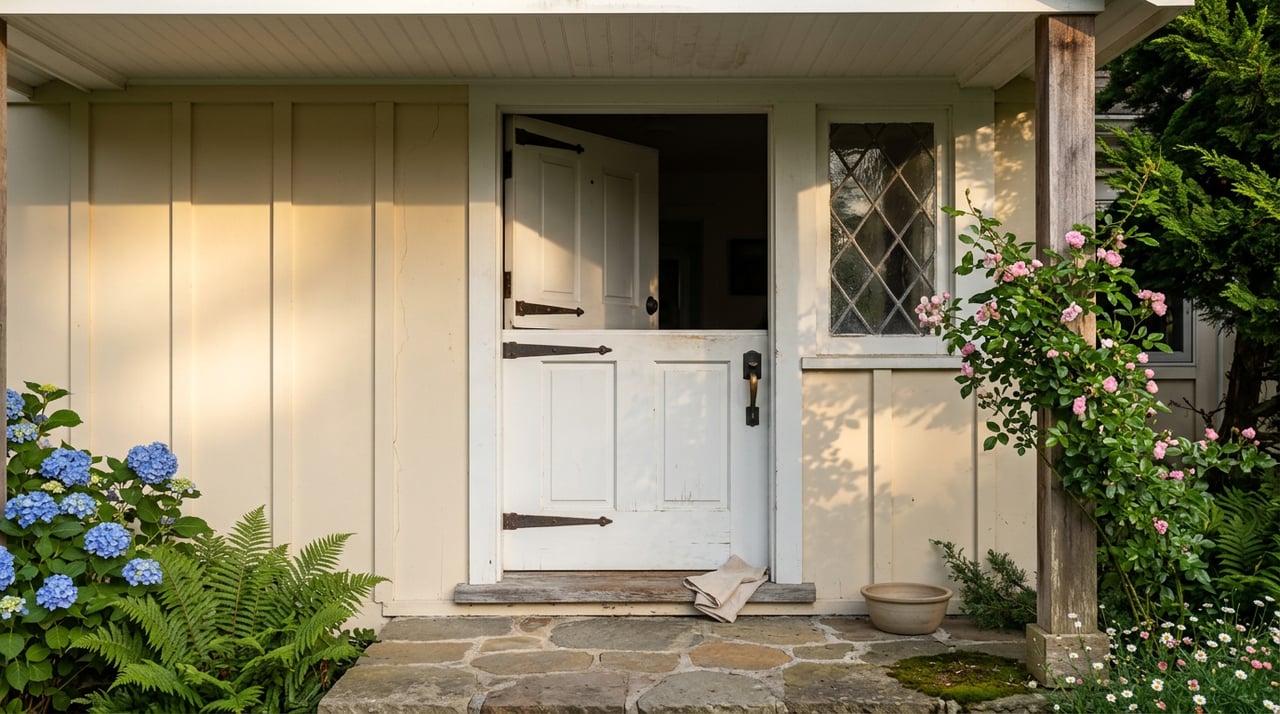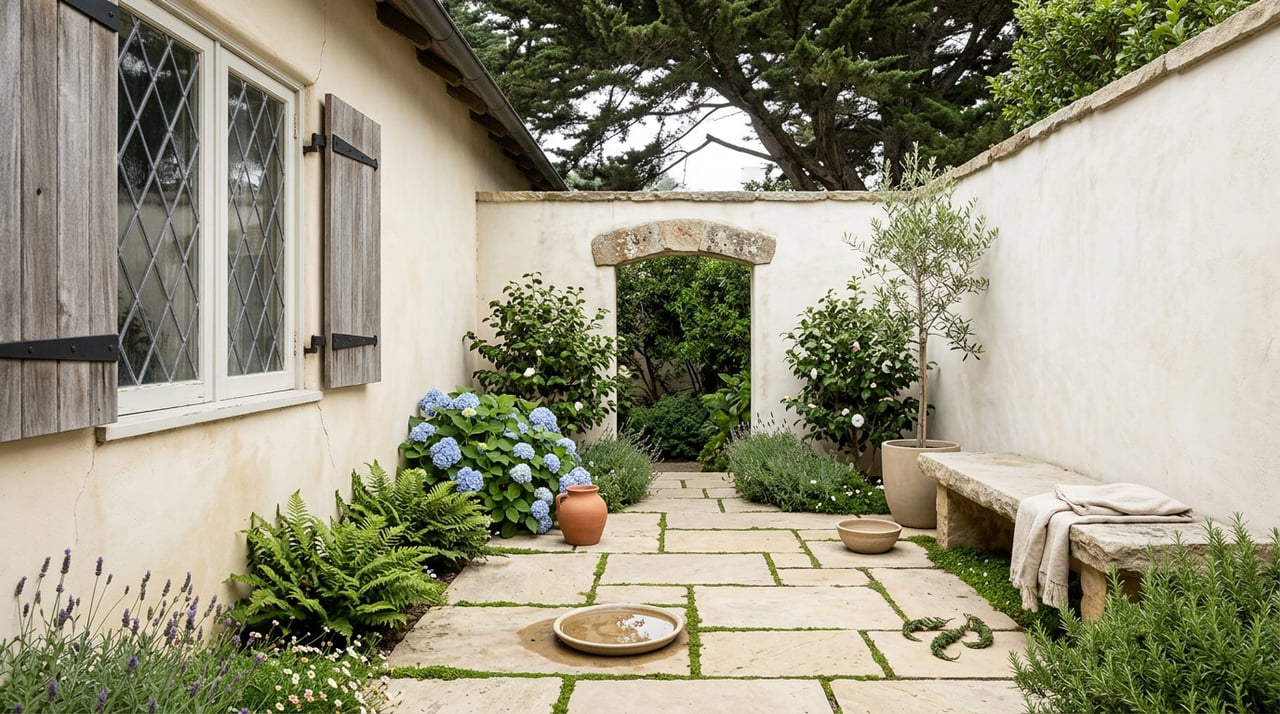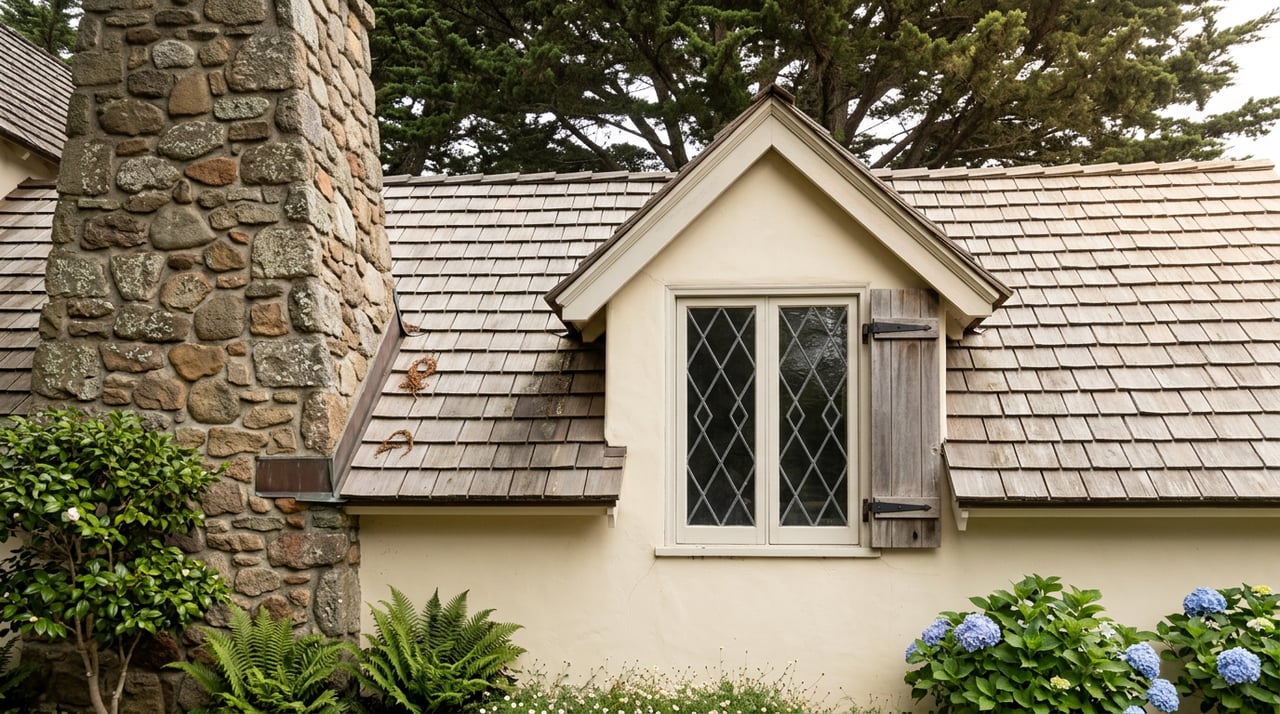
Most guides treat Carmel's no-address tradition as folklore. In a transaction, it is a variable. It changes how an appraiser pulls comps, how a lender funds, how an insurer binds coverage, and how a title company writes the legal description that will follow the property forever. The charm survives the sale. The friction has to be managed before it.
The thesis is narrow. In Carmel-by-the-Sea, the absence of numeric addresses is not a quaint footnote to a listing. It is a set of small operational costs the seller absorbs quietly, or the buyer discovers loudly. Anyone bringing a home to market inside the one square mile should understand where those costs sit, and where the city limit at Santa Lucia Avenue changes the answer entirely.
The line at Carmel Point
There is a common assumption that everything south of Ocean Avenue and west of Highway 1 belongs to the same jurisdiction. It does not. Artists who originally built homes in Carmel-by-the-Sea named their homes instead of giving street names, which is why there are no home addresses; Carmel Point, tucked between Carmel Beach and River Beach, is actually an unincorporated part of Monterey County, so this area does have addresses and any permits must go through the County.
That single distinction reshapes a listing packet. A Scenic Road cottage on the Point carries a numbered address, a County permit history, and County code enforcement records. A cottage three blocks north, still called Carmel by everyone in casual conversation, carries none of those. Two homes sold in the same week can move through escrow on visibly different paperwork.
What breaks first in escrow
The California Residential Purchase Agreement is neutral about addresses. Lenders, appraisers, and insurers are not. Inside the City limits, every one of them has to substitute something for the missing house number, and each substitution introduces a delay if it is not prepared in advance.
- Legal description in place of address. Title vests to a block and lot, or to a metes-and-bounds description. Listing documents describe the home as, for instance, the southeast corner of Lincoln and 7th. Escrow, lender, and hazard insurer must all reconcile those two forms of identification before funding.
- Appraisal comp selection. Unique properties may need more time for appraisal and underwriting. An out-of-area appraiser leaning on address-matched sales databases will underweight comps that only exist in MLS by cross-street. A local appraiser knows the workaround. Building the extra week into the timeline is the seller's job, not the buyer's.
- Wire instructions and delivery. Escrow's standing guidance is to verify wire instructions by calling the escrow officer at the company's main number and never rely solely on emailed instructions. Add to that the fact that lender overnight packages cannot be delivered by street number, and general delivery through the post office at Fifth and Dolores becomes part of the closing choreography.
- Hazard and title insurance. Binders written against a descriptive address rather than a numeric one occasionally kick back through automated underwriting. The fix is manual and takes a call, not a form. Plan for it.
None of these items appears on a standard pre-list checklist. All of them appear in every Carmel escrow.
The permit history problem, in plain terms
Buyers ordering permit history through third-party services routinely come back with a blank return on a Carmel-by-the-Sea parcel. The report is not wrong. It is looking for a street number that does not exist. City records are indexed by block, lot, and Assessor's Parcel Number. A seller who pulls the correct history in advance, using the APN, arrives at the inspection window with an answer rather than a mystery.
The stakes on that homework are real. Carmel properties can involve coastal-zone permits, historic elements, or past unpermitted work, along with Natural Hazard Disclosures covering flood, earthquake, and coastal risks; the inspection window is the time to research permit history and any environmental factors that affect the property. When the buyer's inspector finds a sunroom that City files do not, the burden of proof falls on the seller mid-escrow, at the least convenient moment.
Carmel Point flips this. Permit history for an unincorporated parcel lives with Monterey County's Housing and Community Development office and pulls cleanly by street address. The workflow is faster. The disclosures still deserve the same care.
What the market currently pays for a name
Interpretation matters more than headline numbers, but the headline is worth pinning down. As of May 2026, Zillow reported the average home value in Carmel-by-the-Sea at $2,280,971, up 0.8% over the past year. Read against the village's small inventory and older housing stock, that flat trajectory says something specific. Buyers are paying for location and character, not for volume growth. In a market that is not rising quickly, the sellers who net highest are the ones who eliminate friction from the transaction rather than push list price into speculative territory.
That is why the address issue earns attention out of proportion to its apparent size. In a briskly appreciating market, procedural drag is absorbed by rising comps. In a flat one, a two-week appraisal reissue or a stalled insurance binder is what a price reduction looks like.
A seller's sequence that accounts for it
The pre-market work in Carmel is different from the pre-market work in Monterey or Pacific Grove. Ordered roughly by when it needs to happen:
- Confirm jurisdiction. Verify with the APN whether the parcel sits inside City limits or in the unincorporated Point. Every subsequent step branches from that answer.
- Pull permit history at the source. City files for in-limits homes, County files for the Point. Reconcile them against what is standing on the lot today.
- Assemble the disclosure packet early. Buyers receive the preliminary title report to review easements, liens, and restrictions in the first week of escrow, and seller disclosures arrive early, including state-required forms. Older Carmel homes carry more of these documents than newer inventory anywhere else on the Peninsula.
- Brief the appraiser and the buyer's lender. A short written note explaining the address convention, the APN, and the block-lot legal description prevents the mid-escrow reissue.
- Set expectations on the inspection scope. General home and pest inspections are common, and many buyers add septic, roof, chimney, and permit history reviews because of coastal and older-home factors. Sellers who order a pre-listing chimney and roof review recover the cost in negotiation posture.
- Coordinate wire, key, and document handoff. Because standard courier logistics assume a street number, closing-week logistics need to be arranged with named cross-streets, gate codes where applicable, and post office box coordination for the buyer's forwarded mail.
Every step above is doable in a week or two of focused preparation. Skipping any of them tends to surface during the buyer's contingency period, when leverage has already shifted.
Where this shows up in the offer
Serious buyers write cleaner offers on Carmel homes when the listing packet is complete. If the appraisal comes in below the purchase price, buyers can renegotiate, bring in extra cash, or cancel under the contingency, and in competitive Carmel situations some buyers shorten or waive this contingency or add appraisal gap language. A shortened appraisal contingency assumes the appraisal will not surprise anyone. That assumption breaks when the property record itself is ambiguous. Sellers who resolve the ambiguity before offer week receive stronger contingency terms in return.
There is a related point about property taxes worth noting for out-of-state buyers who ask. Monterey County records show the median effective property tax rate in Carmel-by-the-Sea running at 1.10%, lower than the California state median of 1.21%. The number is useful mainly as a benchmark against Bay Area jurisdictions where buyers often compare from. It does not change the address workflow, but it does change the carrying-cost math those buyers run.
Short FAQ
Does the City assign an address if I need one for a delivery service? No. The City has not adopted numeric addressing, and there is no petition process to receive one inside the limits. Descriptive addressing by cross-street remains the standard.
How is the property identified on the deed? By Assessor's Parcel Number and a legal description referencing the block and lot as recorded in the original subdivision map. The descriptive address is a courtesy layer for MLS and correspondence.
Do lenders treat a Carmel-by-the-Sea home as a rural or non-conforming property? Not typically. It is treated as a legally described urban parcel. The friction sits with data providers and back-office systems that assume a house number, not with the underwriting itself.
What changes if the home is on Carmel Point? The parcel has a numeric address, permit and code records live with Monterey County, and most address-driven databases return clean results. The disclosure standards for coastal, historic, and older-home considerations still apply.
The address tradition is one of the reasons a home in Carmel-by-the-Sea holds its character across decades. It is also one of the reasons the transaction rewards preparation more than pace. Sellers who treat the packet as the product, and the price as the outcome, tend to close on their terms.
For a confidential conversation about bringing a Carmel-by-the-Sea property to market, or reviewing what your parcel's record actually shows before an offer arrives, Michele Altman welcomes the introduction. Let's Connect.