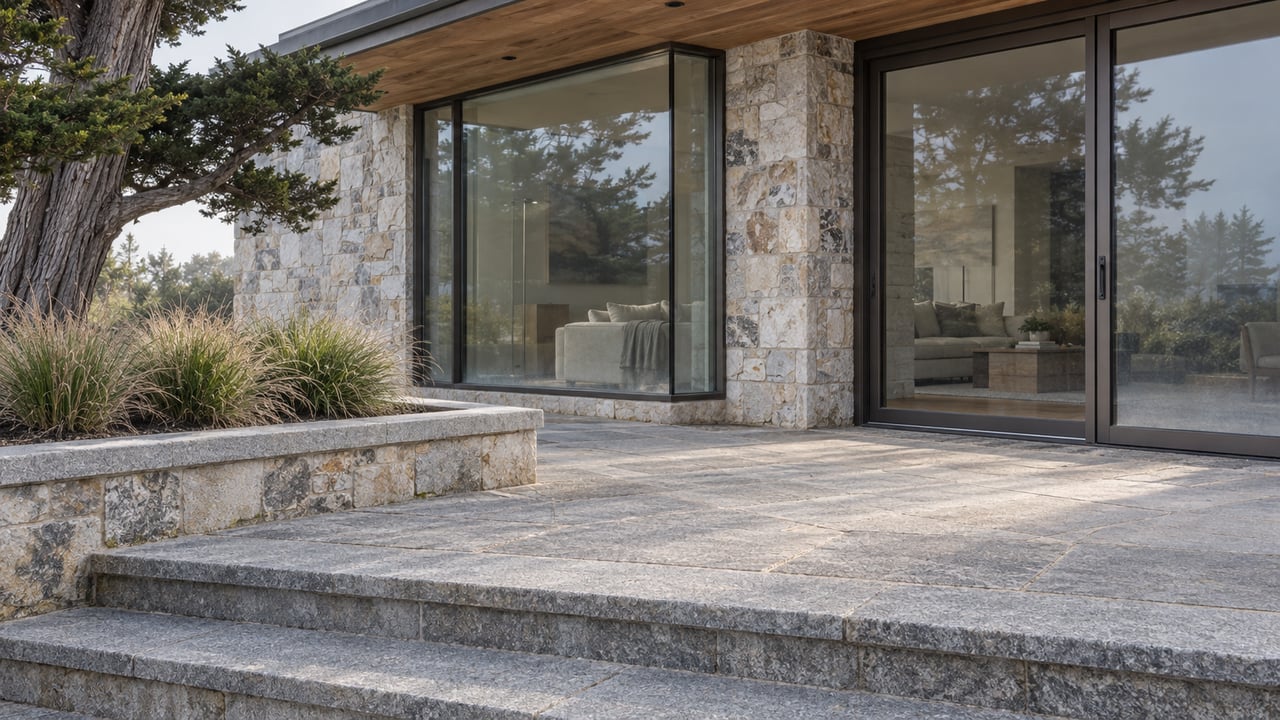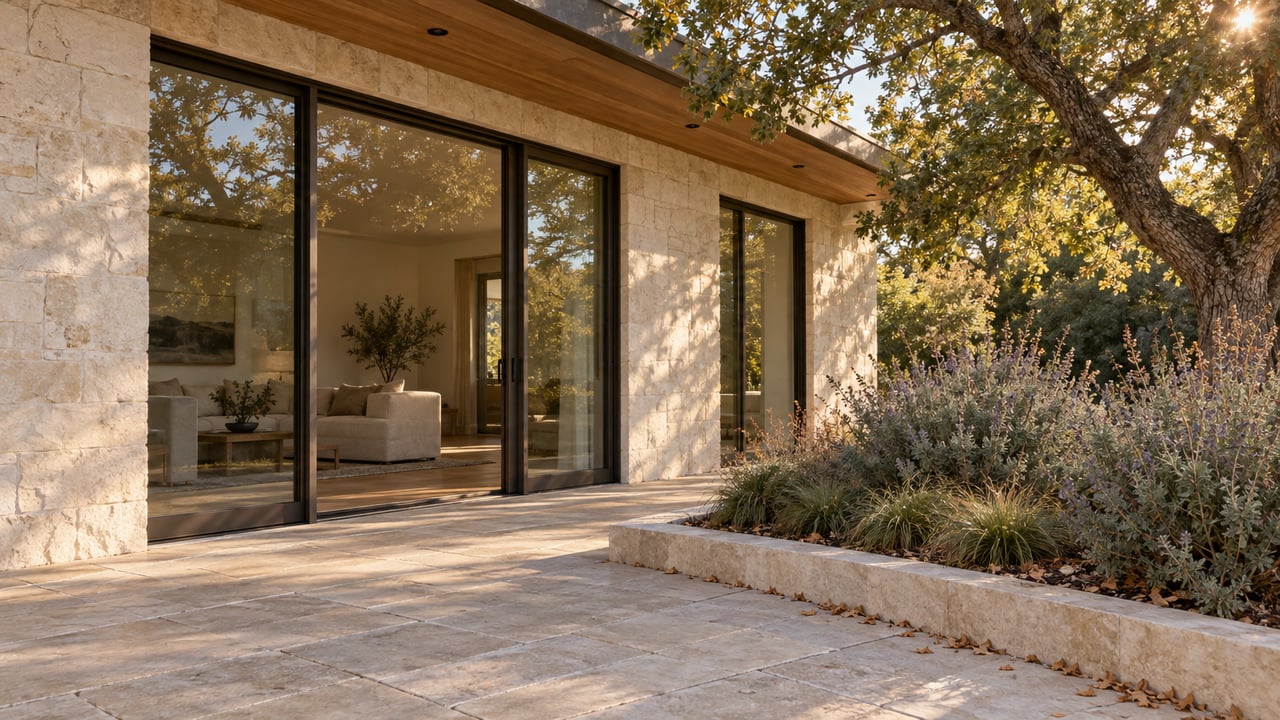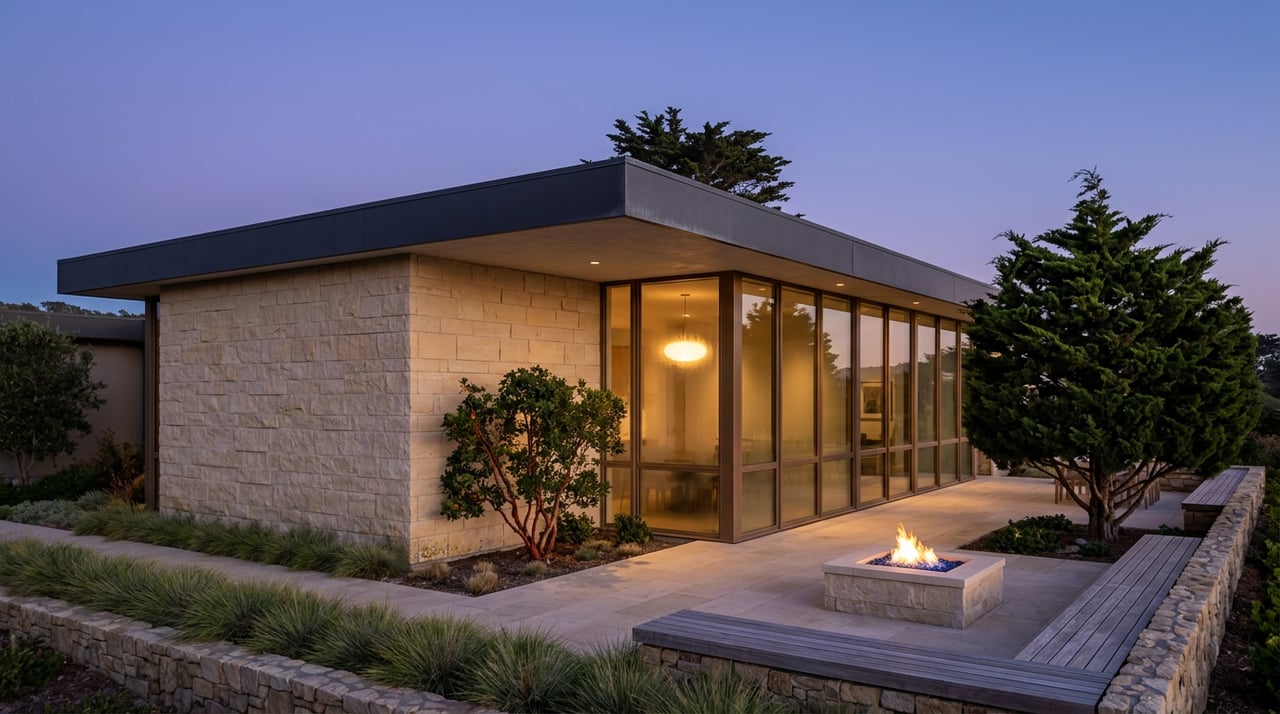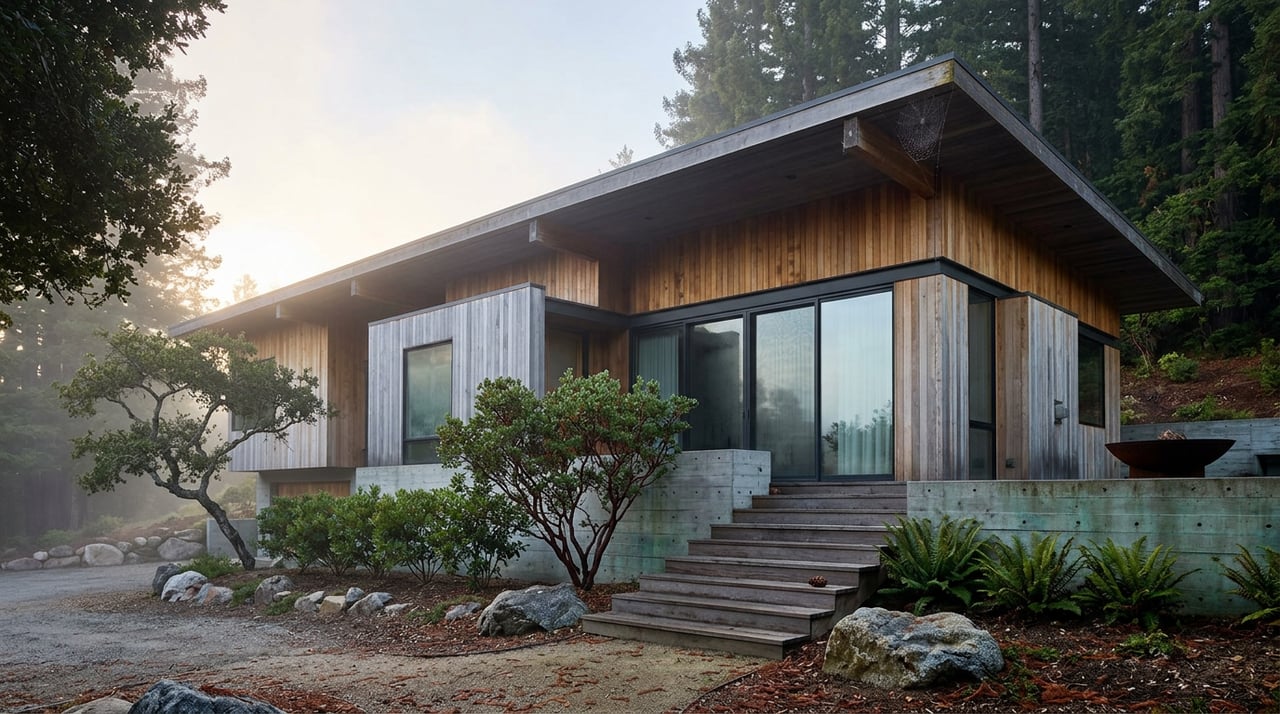
A 0.30-acre parcel is currently listed inside the Garrapatos Redwoods Subdivision, a stand of lots platted along Big Sur's coastal terraces back in 1926. The subdivision holds 348 lots spread across roughly 41 acres, according to Monterey County's Resource Management Agency. There is no water system and no wastewater system serving it. Most of the individual lots, including this one, fall well under the five-acre minimum the county now requires for a legal building site. The listing itself says as much: it is offered for recreation, conservation, or long-term holding, not construction.
That single parcel is the clearest illustration of a pattern that runs through Big Sur real estate at every price point. An acre for sale and an acre you can build on are frequently not the same asset, and the gap between them is not disclosed in a price-per-acre number. A handful of Big Sur land listings on the market this year have carried asking prices that work out to close to a million dollars an acre, based on a small sample of active parcels rather than any stable median. That figure tells you almost nothing about what a buyer is actually purchasing until you know whether the acre in question can legally hold a house.
A 1926 Plat Still Sets the Rules for Some Parcels
Garrapatos Redwoods is not an outlier. Big Sur's coast carries thousands of legal parcels drawn during a period before Monterey County adopted the density minimums that now govern new construction. A deed and an assessor's parcel number confirm that a lot exists on paper. They do not confirm that the county will issue a building permit for it. For lots this small, sitting in a subdivision this old, the honest answer often requires a call to county planning before an offer, not after.
This matters because the asking price on an unbuildable half-acre and a legally conforming five-acre parcel can look similar on a listing sheet, especially when both are marketed on scenery. The difference only shows up once someone asks the county the specific question: is this a legal building site under current code, or is it a historic lot that predates it.
What the Big Sur Land Use Plan Actually Allows
Monterey County's Big Sur Coast Land Use Plan sets some of the most restrictive development standards in California, and the restriction is not incidental. It is the reason land here trades at a premium despite the region's size.
The standard minimum for a new subdivision is 320 acres. Parcels with minimal slope can go as low as 40 acres. A Coastal Commission staff calculation, cited in the plan's own history, put the total number of new parcels legally possible across the entire 234-square-mile Big Sur coastal planning area at roughly 12. Not 12 per year. Twelve, total, ever, under the plan as written.
Density for existing parcels is capped by geography:
| Location | Density limit |
|---|---|
| West of Highway 1 | 1 unit per 2.5 acres |
| East of Highway 1 | 1 unit per 5 acres |
| Established communities (Palo Colorado Canyon, Big Sur Valley) | 1 unit per 2.5 acres |
Roughly 60 percent of the coastal region is held by government or private agencies that do not permit any development at all. The plan also bans large hotels and condominium projects outright, allowing only about 300 additional visitor rooms within the entire plan area, and only in clusters of 30 units or fewer, confined to four rural communities: Big Sur Valley, Lucia, Pacific Valley, and Gorda.
None of this is a warning against buying here. It is the explanation for why the price holds up. Scarcity in Big Sur is not a marketing phrase. It is a fixed number written into a land use plan that has barely moved since it was adopted.
Water and Septic Are the Actual Product
A currently listed 2.61-acre parcel in a gated Bixby Canyon enclave, formerly owned by poet and City Lights founder Lawrence Ferlinghetti and now offered by his son, shows what it actually takes to move a raw Big Sur parcel toward residential readiness. Before it reached the market, the owner completed a new well with a source-capacity review, geotechnical and percolation investigation, and septic planning, in addition to clearing a building site. The property was historically two roughly 1.3-acre lots that were later merged, and the listing notes the potential to explore splitting them back apart, subject to county approval.
Compare that against a Garrapatos lot with no water infrastructure and no wastewater system in place. The Ferlinghetti parcel commands its price partly because someone already absorbed months, and likely tens of thousands of dollars, of due diligence that a buyer would otherwise have to commission themselves. A percolation test, a well feasibility study, and a septic plan are not paperwork. In Big Sur's steep, water-scarce terrain, they are the line items that determine whether a parcel is buyable at all, and straightforward cases can still take a few months to clear, while anything touching Coastal Commission review, CEQA analysis, or habitat mitigation can stretch past a year.
Insurance Arrived at the Closing Table Before You Did
A property in a Very High Fire Hazard Severity Zone triggers a mandatory disclosure at the time of sale and requires 100 feet of defensible space, on top of whatever a carrier separately factors into a quote. Much of Big Sur, along with parts of Carmel Highlands and Carmel Valley, now carries that designation under the state's 2025 hazard map update.
The pricing behind that designation has a specific history. The 2016 Soberanes Fire started from an illegal campfire in Garrapata State Park and burned 132,127 acres through the Santa Lucia Mountains above Big Sur, costing roughly 260 million dollars to suppress, one of the most expensive wildfires to fight in U.S. history at the time. Fifty-seven homes were destroyed, concentrated in Garrapata and Palo Colorado canyons, the same stretch of coast where several of today's oldest legal parcels sit.
Carriers remember that math. In early 2024, homeowners at the Mountain Shadows Townhomes in Monterey saw their fire insurance premium jump from 22,000 dollars a year to 250,000 dollars after their carrier declined to renew, with the deductible rising from 2,500 dollars to 100,000 dollars. Even landing on California's FAIR Plan is not a guaranteed fix. Rancho Cielo, a Monterey County nonprofit campus, was pushed onto the FAIR Plan after losing standard coverage, only to find its buildings were worth more than the plan's 3.3 million dollar per-policy cap.
This is not backstory. As of Wednesday morning this week, the Timber Fire had reached 25,380 acres and 27 percent containment, while the Plaskett Fire stood at 29,862 acres and 61 percent containment after crews made significant overnight progress, according to Cal Fire and local fire coverage. An 11-mile northern stretch of Highway 1 reopened in early September after Timber Fire crews secured control lines, but the southern closure near the Monterey and San Luis Obispo county line remains in place while the Plaskett Fire continues to burn. Anyone closing on Big Sur property this fall is buying into a market where the fire that determines next year's premium may still be on the map today.
Commercial Zoning Is the Scarcest Layer of All
The same designation logic applies above the level of individual home sites. Loma Vista Gardens, established in 1908 and continuously operated as a visitor-serving destination for more than a century, most recently as the home of the Big Sur Bakery & Restaurant until a 2024 kitchen fire destroyed it, is one of only about 14 commercially zoned parcels along its stretch of Highway 1. The land use plan's restrictions do not just cap how many homes can exist. They cap how many businesses can legally exist to serve the roughly 7 million visitors who pass through Big Sur each year. A commercially zoned lot with a documented century of continuous use carries a scarcity value that has nothing to do with its acreage.
Before the Acre Price Means Anything
A buyer evaluating Big Sur land or an existing home should treat the following as non-negotiable, ahead of any offer:
- Confirm with Monterey County planning whether the parcel is a legal building site under current density minimums, not just a recorded lot with an assessor's parcel number.
- Commission or review a percolation test and well feasibility assessment before the contingency period, not during escrow.
- Request an actual insurance quote, not an assumption of insurability, especially for anything in a Very High Fire Hazard Severity Zone.
- Determine whether the parcel falls under Monterey County's direct permitting authority or within California Coastal Commission appeal jurisdiction, since that single distinction can add a year or more to any future project.
The land use plan, the water table, and the insurance market all move slower than a listing photo. The buyers who do well here are the ones who price the acre by what it is legally and physically allowed to become, not by what the view suggests it should be worth.
If you are weighing a Big Sur parcel, an existing coastal home, or a legacy property that needs the kind of quiet, informed diligence this stretch of coast demands, Michele Altman works this market with the discretion and procedural fluency it requires. Let's Connect.